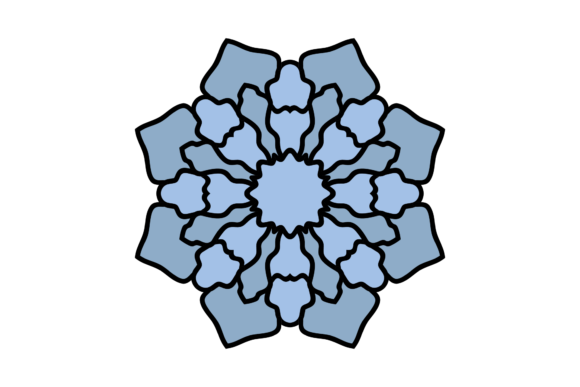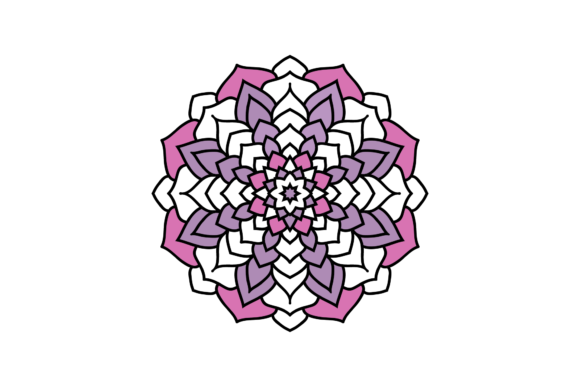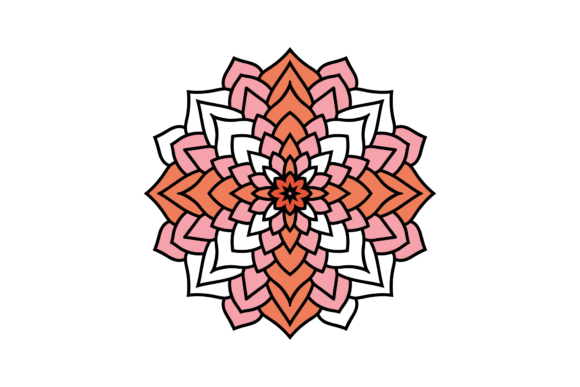
Mandala Patterns Style Beauty
There’s a quiet power in symmetry — in circles that fold inward and radiate outward with intention. Mandala Patterns Style Beauty taps into that timeless visual language, translating ancient sacred geometry into clean, modern digital assets designed for real-world use. It’s not just decoration. It’s structure with soul — precision paired with presence.
What Makes This More Than Just Another Pattern Pack?
This collection isn’t built for background filler. Each of the six digital files is crafted at 1920px × 1280px — a versatile canvas size that works across desktop displays, presentation slides, social media banners, and even print-ready layouts (with proper scaling). More importantly, the formats are chosen for function: AI and EPS for vector editing in Adobe Illustrator or Affinity Designer; SVG for web integration and responsive scaling; DXF for laser cutting, CNC routing, or vinyl plotting; JPG for quick sharing and previews; PNG for transparent overlays on websites, presentations, or mockups.
That format diversity means you’re not locked into one workflow. A graphic designer can tweak anchor points in AI. A maker can import the DXF directly into LightBurn or Cricut Design Space. A blogger drops the PNG into Canva without losing crispness. An educator uses the SVG in an interactive lesson about symmetry or cultural art forms. No conversion headaches. No pixelated surprises.
Why Symmetry Still Matters — Especially Now
In a world saturated with fragmented visuals and rapid-scroll content, mandalas offer something rare: visual rest. Their radial balance creates instant harmony — a subconscious pause button for the eye. That’s why Mandala Patterns Style Beauty resonates across so many contexts: wellness branding, mindfulness course materials, boutique packaging, yoga studio signage, even academic posters on cognitive psychology or cross-cultural symbolism.
But it’s not just about calm. It’s about clarity. Mandalas organize information intuitively — think of them as natural frameworks for infographics, mind maps, or brand value diagrams. You can layer text inside the central circle, assign concepts to quadrants, or use concentric rings to show progression or hierarchy. The pattern doesn’t distract — it *supports* meaning.
Real Uses — Not Just “Ideas”
- Branding & Marketing: Use the SVG as a subtle watermark on client proposals or email footers. Apply the AI file to create custom icons for a meditation app interface — each icon anchored by the same underlying geometry for cohesion.
- Educational Tools: Print the JPG at poster size for classroom walls. Import the DXF into Tinkercad and 3D-print tactile mandala models for students exploring geometry or sensory learning.
- Product Design: Laser-cut the DXF onto wood or acrylic for coasters, wall art, or jewelry components. The clean vector paths ensure sharp edges and consistent line weights every time.
- Digital Publishing: Embed the PNG in an eBook chapter on mindfulness practices. Its transparency lets you overlay it on textured backgrounds without clipping or blending issues.
- Content Creation: Animate the SVG in After Effects — rotate layers independently, fade rings in sequence, or use it as a transition element between video segments. Vector = smooth, scalable motion.
Usability Is Built In — Not Added Later
You’ll notice these aren’t overly ornate or densely detailed. That’s intentional. Mandala Patterns Style Beauty balances aesthetic richness with practical editability. The linework is consistent in weight and spacing — no accidental overlaps or stray anchor points. Colors are set in standard RGB (not spot colors), so they translate predictably across screens and basic CMYK workflows. There’s no embedded raster imagery muddying the vectors — everything stays crisp, whether scaled down to a favicon or up to a trade show backdrop.
That attention to technical hygiene saves hours. You won’t spend time cleaning layers, re-tracing fuzzy edges, or troubleshooting missing fonts. What you receive is production-ready — not “inspiration that needs fixing.”
Choosing the Right Format — Without Guesswork
Not sure which file to reach for first? Here’s how professionals typically start:
- AI or EPS if you need full control — recoloring individual segments, adjusting proportions, or integrating with existing brand assets.
- SVG when embedding directly into HTML, WordPress themes, or interactive dashboards where responsiveness matters.
- DXF for any physical fabrication — especially useful if you work with makerspaces, local print shops, or run your own cutting equipment.
- PNG when you need transparency fast — for social posts, pitch decks, or layered design comps.
- JPG for email attachments, client previews, or platforms that don’t support SVG or vector uploads.
The fact that all six formats are included — and match identically in composition — means you’re never choosing between fidelity and convenience. You get both.
A Note on Cultural Respect and Creative Responsibility
Mandalas originate in spiritual traditions across Hinduism, Buddhism, Indigenous cultures, and beyond — often serving as tools for meditation, ritual, or cosmological representation. Mandala Patterns Style Beauty honors that lineage through restraint and abstraction. These aren’t literal religious symbols repurposed without context. They’re contemporary interpretations — geometric, secular, and adaptable — designed for visual utility first. If you plan to use them in culturally sensitive contexts (e.g., wellness retreats, spiritual publishing), consider pairing them with thoughtful attribution or contextual explanation — not as a legal requirement, but as a mark of integrity.
Final Thought: Beauty That Works Harder
Great design assets don’t shout. They settle in — quietly elevating layouts, smoothing workflows, and reinforcing messages without demanding attention. Mandala Patterns Style Beauty does exactly that. It’s the kind of resource you return to again and again: for a last-minute presentation slide, a refined product label, a calming website section, or a hands-on workshop activity. It’s not flashy. It’s reliable. And in creative work — especially when time is tight and standards are high — reliability is the rarest kind of beauty.