Seamless Science Fiction Patterns: A Creative Powerhouse for Designers and Makers
Imagine designing a futuristic book cover, crafting custom apparel with interstellar flair, or building immersive digital backdrops for a game—without stitching tiles, battling pixelation, or wrestling with awkward repeats. That’s the power of seamless science fiction patterns. These aren’t just sci-fi-themed graphics; they’re precision-engineered, tileable assets designed to scale infinitely across any surface—digital or physical—while maintaining crisp detail and cohesive storytelling.
What Exactly Are Seamless Science Fiction Patterns?
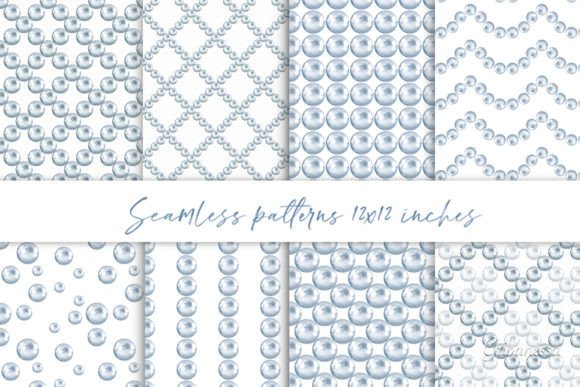
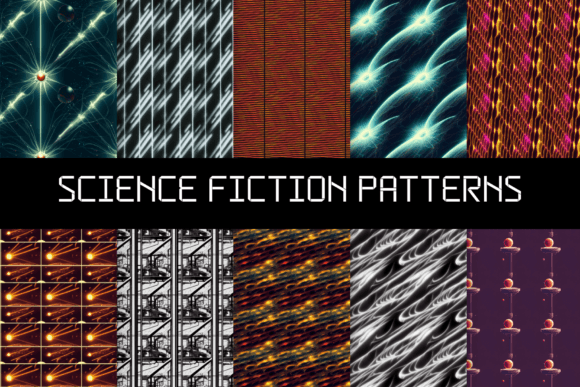
At their core, seamless patterns are digital images engineered so their edges align perfectly when repeated side-by-side or top-to-bottom. There’s no visible seam, no abrupt break in rhythm—just smooth, endless repetition. When that principle is applied to science fiction aesthetics—think holographic grids, nebula gradients, circuit-board textures, alien glyphs, quantum waveforms, or retro-futuristic chrome lattices—you get seamless science fiction patterns.
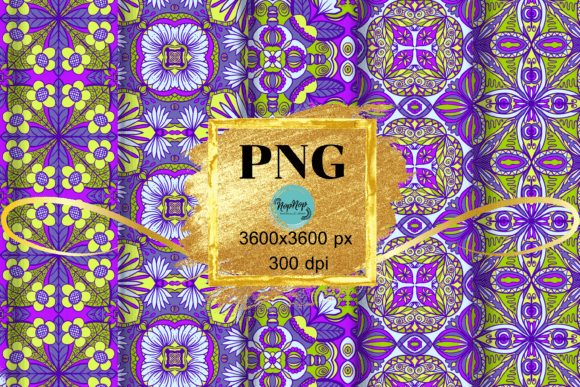
This specific set includes 10 high-resolution PNG files, each measuring approximately 2500 × 2500 pixels. That resolution strikes an ideal balance: large enough for print-on-demand products (like posters, phone cases, or fabric rolls) and sharp enough for retina displays, yet optimized for fast loading and easy integration into design workflows.
Why “Seamless” Matters More Than You Might Think
Many designers assume any sci-fi image can be tiled. But without intentional edge-matching, repetition reveals jarring mismatches—like a starfield where constellations collide, or a tech grid where lines vanish mid-tile. True seamlessness requires careful cloning, blending, and frequency balancing. It’s not just technical—it’s visual storytelling continuity.
For example: A pattern mimicking a deep-space navigation interface must maintain consistent line weight, spacing, and glow intensity at every boundary. If it doesn’t, the illusion of a unified control panel breaks down—undermining immersion in your project.
Where These Patterns Fit Into Real-World Creativity
These 10 patterns aren’t niche collectibles—they’re versatile tools bridging imagination and execution. Here’s how they show up across industries and everyday use cases:
- Print-on-Demand (POD) Businesses: Apply them directly to t-shirts, tote bags, notebooks, or wall art. Because they’re seamless, you avoid unsightly borders or stretched distortions—even on large-format prints like duvet covers or wallpaper rolls.
- Digital Paper & Planners: Use them as subtle backgrounds in Notion templates, PDF planners, or iPad note-taking apps. Their low-contrast sci-fi motifs (e.g., faint orbital paths or minimalist data streams) add personality without overwhelming text.
- Game & App UI Design: Integrate them into HUD elements, loading screens, or menu backdrops. Their scalable nature means one asset works across mobile, desktop, and console resolutions.
- Educational & Presentation Materials: Teachers and STEM communicators use them to visually reinforce concepts—like overlaying a quantum waveform pattern behind a lesson on superposition, making abstract ideas feel tangible.
- Brand Identity & Marketing: Tech startups, podcast studios, or speculative fiction publishers leverage these patterns for email headers, social media banners, or presentation decks—communicating innovation and forward-thinking energy instantly.
Common Misconceptions—Debunked
Misconception #1: “All sci-fi patterns are interchangeable.”
Reality: Tone, era, and intent matter. A gritty cyberpunk grunge texture won’t suit a clean, optimistic space-exploration brand. This set intentionally balances variety—some patterns lean into analog futurism (think 1970s NASA typography meets soft glows), others embrace sleek, AI-era minimalism. Each serves a distinct narrative purpose.
Misconception #2: “High resolution means heavy file sizes.”
Reality: These PNGs are optimized—not bloated. At ~2500px square, they load quickly in design software and web editors while retaining fidelity for professional output. No need to downscale and lose detail—or upscale and introduce blur.
Misconception #3: “Only illustrators or developers need seamless assets.”
Reality: Anyone using Canva, Google Slides, Procreate, or even Microsoft Word can drag-and-drop these. They’re beginner-friendly by design—and powerful enough for advanced users who’ll mask, layer, or animate them.
How to Use These Patterns Effectively (Even If You’re New)
You don’t need a degree in graphic design to get great results. Start simple:
- Test scale first: Drop a pattern into your canvas and zoom out. Does the motif remain legible? Does repetition feel natural, not dizzying? Adjust opacity (often 5–15%) for subtlety.
- Pair with contrast: Seamless sci-fi patterns shine when grounded with strong typography or bold focal elements. Try a stark white font over a dark nebula repeat—or glowing cyan text atop a matte carbon-fiber base.
- Break the grid intentionally: Place a non-repeating hero element (a rocket icon, a character portrait, a quote box) over the pattern. The contrast between static and dynamic reinforces hierarchy and focus.
- Experiment with color modes: Most patterns work in RGB (for screens) and CMYK (for print). If printing, convert carefully—and preview with soft proofing to ensure metallic or neon tones translate accurately.
Why This Set Stands Out Among Sci-Fi Assets
Not all pattern packs deliver equal value. What makes this collection especially useful is its intentional cohesion and technical rigor:
- No stock clichés: You won’t find overused laser grids or generic planet silhouettes. Instead: bioluminescent coral networks reimagined as data flows, fractal antenna arrays, and quantum foam simulations rendered with organic precision.
- Consistent DPI & transparency: Every PNG uses alpha channels correctly—so overlays work flawlessly over photos, videos, or colored backgrounds.
- Future-proof flexibility: Designed with modern workflows in mind, they integrate smoothly with Figma auto-layouts, Adobe Substance 3D Painter, and even generative AI tools for prompt augmentation (e.g., “sci-fi pattern inspired by [this PNG] but with warmer chromatic aberration”).
Looking Ahead: Patterns as Narrative Tools
Patterns do more than decorate—they communicate. A pulsing chronometric lattice whispers “time travel interface.” A softly rotating helix grid evokes genetic coding or neural networks. In an age where attention is fragmented and meaning is layered, these visuals become shorthand for complex ideas.
That’s why educators use them in physics modules, UX teams embed them in AR onboarding flows, and indie authors feature them on Patreon tiers—they transform passive viewing into contextual engagement. They’re not background noise. They’re quiet worldbuilding.
Whether you're launching a sci-fi podcast, prototyping a wearable tech concept, or simply refreshing your desktop wallpaper with something that sparks curiosity—these 10 seamless science fiction patterns offer substance, scalability, and style. They meet you where you are: no steep learning curve, no licensing surprises, and no creative compromises.
Because great design shouldn’t begin with troubleshooting seams—it should begin with wonder.