Halloween Digital Patterns 007
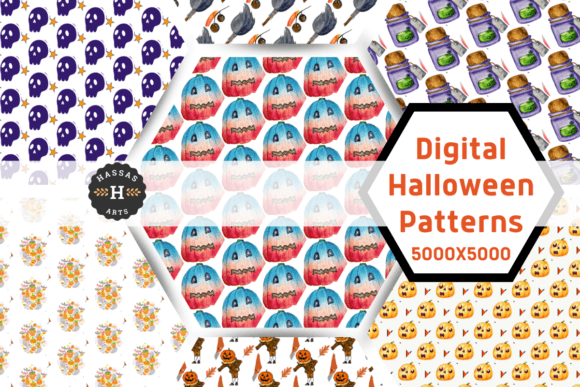
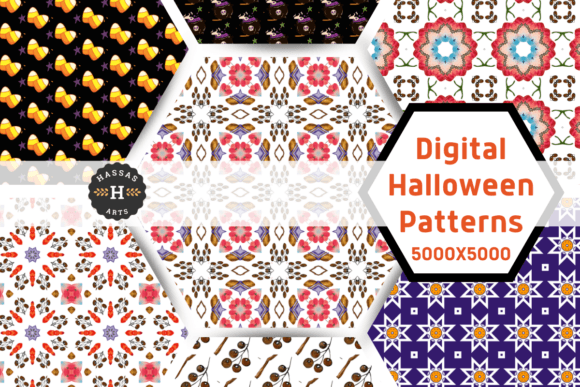
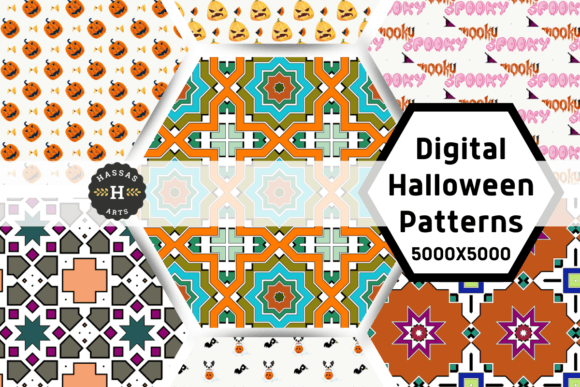
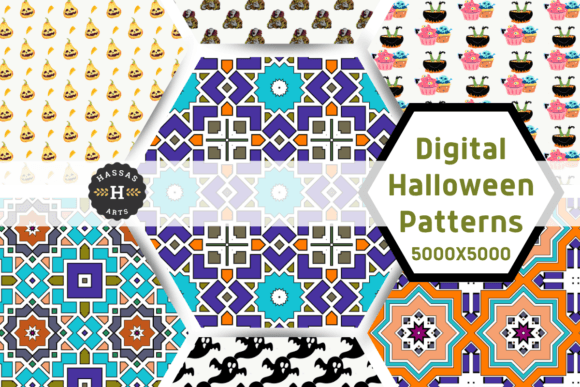
Imagine crisp, confident geometry meeting the playful spirit of Halloween—not with cartoon bats or dripping pumpkins, but through sharp angles, repeating motifs, and layered symmetry that whisper “midnight masquerade” and “modern witchcraft” in the same breath. Halloween Digital Patterns 007 is a tightly curated set of high-resolution, geometrically grounded digital patterns designed for creators who value intention over ornamentation. Each pattern balances restraint and rhythm: think interlocking hexagons overlaid with subtle tonal ghosts, tessellated triangles echoing cobweb tension, or concentric diamond grids that shift perspective depending on scale and substrate. There’s no clipart clutter—just clean vector-derived structures rendered at 5000×5000 px in PNG format, ready to hold detail whether printed on kraft paper for handmade garlands or stretched across a gallery wall on matte canvas.
Where These Patterns Earn Their Keep
These aren’t background filler—they’re design collaborators. Because they’re built from scalable geometry rather than illustrative elements, Halloween Digital Patterns 007 adapts without visual compromise across contexts where texture and cohesion matter most. For small business owners printing limited-run greeting cards or gift tags, the patterns add tactile sophistication without requiring specialty inks. Bloggers and content creators use them as layered overlays behind social media quote graphics—especially effective when desaturated slightly to let text breathe. Designers building seasonal brand kits apply them as secondary textures behind logos or within email headers, reinforcing identity without competing for attention. And crafters? They print onto vellum for lantern inserts, cut them into stencils for chalk-painted floor decals, or layer them under transparent acrylic for dimensional coasters—all because the 300 DPI resolution holds up at both micro and macro scales.
More Than Just Pretty Repeats
Geometric patterning isn’t new—but its application in seasonal design often leans either nostalgic (vintage lace motifs) or literal (jack-o’-lantern silhouettes). Halloween Digital Patterns 007 sidesteps both by anchoring mood in structure. That matters for perception: studies in environmental psychology show consistent, ordered repetition signals competence and care—qualities audiences subconsciously associate with trustworthy brands and polished creative work. When you use these patterns in packaging design for a candle line or a boutique soap collection, you’re not just decorating—you’re reinforcing reliability through visual language. Likewise, in editorial design for a seasonal newsletter or zine, pairing a strong sans serif headline with a subtle background repeat from this set creates hierarchy *without* relying solely on size or weight. The geometry does quiet work: guiding the eye, defining zones, and adding depth that flat color can’t replicate.
Testing Fit Before You Commit
Before downloading or integrating, ask two practical questions: What’s the dominant surface or medium? and What’s the viewer’s proximity and duration? A bold, high-contrast pattern might energize a 48″ trade show backdrop but overwhelm a 3″ square Instagram story sticker. Likewise, a fine-line grid could vanish on uncoated newsprint but sing on glossy photo paper. Try this: open one pattern in your editing software, place it behind real body copy at intended size, then step back three feet. Does the text remain effortlessly legible? Does the pattern recede—or fight? If it competes, reduce opacity by 5–10% or switch to a lower-frequency variant from the set. Also check how it behaves when scaled down to thumbnail size: some geometries collapse into visual noise at small dimensions. The patterns in Halloween Digital Patterns 007 were tested across this range—most retain clarity even at 25% scale—but your specific use case may call for selective application.
Pairing With Purpose
These patterns thrive alongside typefaces that respect their precision. Avoid overly decorative scripts or distressed serifs that clash tonally. Instead, lean into contrast: pair a tight, neutral sans serif (think Montserrat or Inter) for headings with a pattern that has rhythmic spacing—like the offset rhombus repeat—to create breathing room. For invitations or premium packaging, try layering a light-weight serif (e.g., EB Garamond) over a muted monochrome version of the triangle lattice. The key is balance: let the pattern provide texture while typography carries voice and information. If you’re designing for web, remember that CSS background-repeat works cleanly with these files—but avoid tiling at full opacity behind live text unless you’ve added sufficient contrast via text shadow or overlay. Test on both light and dark mode previews.
Licensing That Matches Real Workflows
All patterns in Halloween Digital Patterns 007 include an extended commercial license—meaning you can use them in client projects, sell physical products featuring the patterns (like mugs, tote bags, or stationery), and incorporate them into digital templates you distribute or license. No attribution required. But here’s what the license doesn’t cover: reselling the pattern files themselves as standalone assets, claiming authorship, or using them in AI training datasets. If you’re a publisher bundling these into a craft ebook or a marketer building a branded Halloween campaign toolkit, you’re covered—as long as the patterns remain embedded, not extracted. Always verify your end-use against the included license PDF; terms are clear, concise, and written in plain English—not legalese.
Ultimately, Halloween Digital Patterns 007 is about giving dimensionality to intention. It’s for the designer who chooses a hexagon over a scallop because it implies precision. For the entrepreneur who knows texture builds memory faster than color alone. For the crafter who wants to print once and iterate endlessly—no redraws, no tracing, no pixelation. These aren’t “Halloween-y” patterns disguised as geometry. They’re geometric patterns that happen to resonate with Halloween’s duality: order and mystery, edge and echo, structure and surprise.