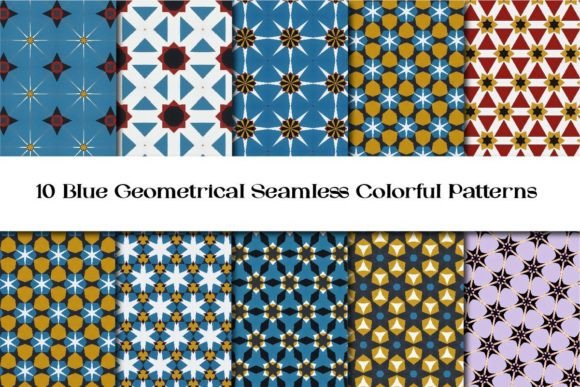
Seamless Star Patterns on Blue Background
Imagine opening a design project and instantly having access to a polished, professional star motif that repeats flawlessly—no visible seams, no awkward edges, no pixelation at any scale. That’s the quiet power of Seamless Star Patterns on Blue Background: not just decoration, but a functional, versatile asset built for real-world use across digital and print workflows.
Why Seamless Matters More Than Ever
In today’s fast-paced creative environment, efficiency isn’t optional—it’s expected. Designers, marketers, and educators routinely juggle multiple platforms: social media banners, presentation decks, website headers, printed brochures, merchandise mockups, and even video overlays. Each demands consistency in tone and quality, yet each imposes different technical constraints—resolution requirements, file format limits, color mode shifts (RGB vs. CMYK), and scaling behavior. A pattern that “looks fine” at 500px wide may break apart when stretched across a 4K display or printed on a 24-inch banner. Seamless Star Patterns on Blue Background solve this by being inherently scalable and repeatable—designed from the ground up to tile without interruption, whether viewed on a smartphone screen or a trade show backdrop.
This isn’t about nostalgia for celestial motifs. It’s about practical responsiveness. Blue backgrounds—especially deep navy, soft cobalt, or muted cerulean—carry strong associations with trust, calm, and professionalism. Paired with clean, evenly spaced stars, the result is a visual language that feels both grounded and aspirational—ideal for tech startups explaining complex ideas, educators building engaging learning materials, or wellness brands communicating clarity and balance.
How File Flexibility Supports Modern Workflows
The ZIP folder you receive isn’t just a collection of files—it’s a toolkit aligned with how people actually work today. Inside, you’ll find:
- AI (Adobe Illustrator) — For precise editing, recoloring, or integrating into larger vector compositions.
- SVG — Lightweight, resolution-independent, and natively supported in web development; perfect for animated backgrounds or responsive UI elements.
- PNG (High Resolution) — Ready-to-drop transparency support, ideal for quick mockups, social posts, or presentations where vector tools aren’t available.
- EPS — Legacy-safe for older print workflows or compatibility with certain publishing software.
- JPG — Optimized for email, CMS uploads, or platforms with strict file-type restrictions.
This multi-format approach reflects how professionals move fluidly between tools and contexts. A freelance graphic designer might start in Illustrator to adjust spacing and hue, export an SVG for a client’s WordPress site, then drop a PNG into a Canva pitch deck—all without reworking the core pattern. No more converting, resampling, or compromising fidelity.
Customization Isn’t Just Possible—It’s Encouraged
“Seamless” doesn’t mean rigid. These star patterns are designed with adaptability in mind. The blue background isn’t locked to one shade—it’s a starting point. You can shift it to match your brand’s exact Pantone, lighten it for a daytime interface, deepen it for nighttime apps, or even replace it entirely with charcoal, slate gray, or soft lavender. Stars themselves can be resized, softened with subtle opacity, or recolored to gold, silver, or pastel tones—without disrupting the tiling logic.
This level of control matters because audiences increasingly expect visual coherence—not just across a single page, but across touchpoints. A small business launching a new product might use the same star motif in its email newsletter (JPG), its Shopify store banner (SVG), and its packaging mockup (AI). When the base pattern is consistent—and customizable—the brand feels intentional, not pieced together.
Real-World Uses Beyond the Obvious
Most people first think of wallpapers or website backgrounds. But the utility runs deeper:
- Educators use subtle star patterns as low-distraction backgrounds for slide decks—helping text stay legible while adding quiet visual interest during virtual lectures.
- Product managers embed them into roadmap PDFs or investor decks to soften data-heavy layouts without sacrificing professionalism.
- Bloggers and content creators apply them as watermarks on infographics or as texture overlays on featured images—adding depth without competing with primary visuals.
- Print-on-demand entrepreneurs integrate the EPS or AI files directly into apparel or stationery templates, ensuring stars align perfectly across seams on tote bags or notebook covers.
What ties these uses together isn’t the stars themselves—but the reliability of the underlying structure. Because the pattern is truly seamless, it behaves predictably. There’s no last-minute panic over misaligned tiles before a client review or launch deadline.
Shifting Expectations in Visual Communication
A decade ago, stock graphics often prioritized variety over integration. Today, users prioritize assets that *work*—not just look nice. That means respecting file standards, supporting accessibility (e.g., sufficient contrast between stars and background), and enabling localization (e.g., swapping blue for culturally resonant alternatives in global campaigns). Seamless Star Patterns on Blue Background meet that standard: high contrast out of the box, vector-native scalability, and format coverage that reduces friction—not adds it.
We’re also seeing a quiet shift away from “busy” backgrounds toward restrained, purposeful texture. Overly dense patterns fatigue the eye; overly minimal ones feel sterile. These star arrangements strike a balance—structured enough to feel intentional, open enough to let content breathe. That balance is why they appear in SaaS dashboards, university course pages, and meditation app interfaces alike.
Getting Started Without Overcomplicating Things
You don’t need advanced design skills to benefit. Start small:
- Open the PNG in your presentation tool and set it as a slide background—then adjust text color for optimal readability.
- Drag the SVG into a Figma or Adobe XD prototype and use it as a repeating fill layer behind a call-to-action button.
- In Illustrator, select the blue background and change its fill using the Color Picker—try a 10% lighter or darker version to test hierarchy.
- For print projects, open the EPS in InDesign and place it as a full-page background, then overlay semi-transparent text boxes to ensure legibility.
Each step takes under a minute. And because all formats share the same underlying geometry, changes made in one context translate cleanly to another. There’s no “version confusion”—no wondering whether the JPG matches the SVG or if the AI file has updated spacing.
Looking Ahead—Without Overpromising
Will seamless patterns replace custom illustration? No. Will they eliminate the need for thoughtful layout? Absolutely not. But they do fill a growing gap: the need for high-quality, production-ready visual foundations that respect time, context, and technical reality. As tools like Figma, Webflow, and Canva continue lowering the barrier to design, the value of well-engineered, interoperable assets only increases.
Seamless Star Patterns on Blue Background represent a small but meaningful evolution—not in what they depict, but in how reliably they perform. They reflect a broader trend: moving from decorative afterthoughts to foundational components. Not flashy. Not trendy for trend’s sake. Just consistently useful, quietly adaptable, and ready when you are.