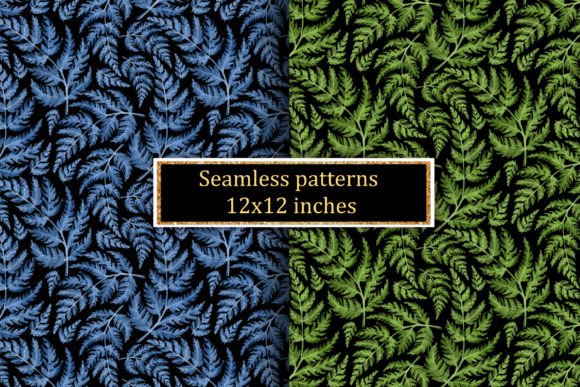
Leaves on Black. Seamless Patterns
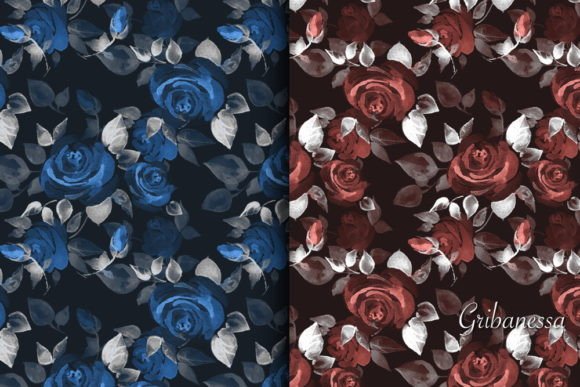
There’s a quiet shift happening in how creators approach visual texture—less about chasing trends, more about choosing elements that hold up across mediums, moods, and moments. Leaves on Black. Seamless Patterns reflects that shift: a pair of high-resolution, thoughtfully composed JPG files where organic leaf motifs flow effortlessly against a deep, rich black ground. No visible repeats. No awkward seams. Just 3600×3600 pixels at 300 dpi—designed to scale cleanly from a handmade greeting card to a full-wall mural.
Why seamless matters—beyond aesthetics
Seamless patterns aren’t just a design convenience—they’re a workflow necessity. Today’s creators juggle multiple outputs: a single project might involve printing invitations, cutting vinyl decals, digitizing for social posts, and prepping files for fabric printing—all within the same week. A non-seamless pattern introduces friction: extra time spent masking edges, adjusting tile alignment, or downscaling to hide repetition. With Leaves on Black. Seamless Patterns, that friction disappears. The repeat is built-in, tested, and resolution-robust—so you spend less time editing files and more time refining your idea.
This isn’t theoretical. A small-batch stationery maker told us she switched to seamless botanicals after losing three hours repositioning a leaf border across 42 wedding invitation suites. A textile designer used one of these patterns to prototype a limited-run scarf line—uploading directly to her print-on-demand partner with no raster adjustments needed. That kind of reliability is increasingly non-negotiable, especially when clients expect fast turnarounds and consistent quality across physical and digital touchpoints.
Black as a foundation—not an afterthought
The choice of black as the base color is deliberate—and timely. While bright, saturated backgrounds still have their place, many designers are gravitating toward deeper, more grounded palettes. Black offers contrast without competition. It lets leaf forms read clearly at small sizes (think envelope liners or journal headers) while supporting bold typography or metallic foil accents at larger scales (wall art, packaging). Unlike white or neutral grounds, black also minimizes color-shift surprises during print—especially important for crafters using home printers or local print shops with variable calibration.
It’s also versatile across applications. In scrapbooking, black provides subtle drama behind photos without overwhelming them. For gift wrapping, it lends sophistication to kraft paper or matte ribbons. On fabric, it creates depth that reads well in both natural and artificial light—key for apparel or home décor items meant to be lived with, not just displayed.
Resolution that keeps pace with real-world use
3600×3600 pixels at 300 dpi isn’t overkill—it’s insurance. Consider how often a single pattern file gets repurposed: scaled down for a 4×6 photo card, enlarged to cover a 24×36 inch canvas, cropped tightly for a phone case mockup, or converted to vector for laser-cut stencils. Lower-res files degrade quickly under those demands. Pixelation creeps in. Fine leaf veins blur. Edges soften where crispness matters most.
These JPGs avoid that compromise. At full size, they retain intricate detail—subtle veining, layered leaf overlaps, gentle tonal variation—even when zoomed in at 200% in design software. And because they’re delivered as clean, flat JPGs (not layered PSDs or complex vectors), they open instantly in virtually any program: Adobe Creative Cloud, Affinity Suite, Canva Pro, GIMP, or even basic photo editors. No plugins. No compatibility headaches. Just drag, drop, and adapt.
Where botanicals meet intentionality
Botanical motifs remain enduring—not because they’re trendy, but because they carry quiet resonance. Leaves suggest growth, continuity, renewal. They’re universally legible yet endlessly interpretable: minimalist or lush, vintage or modern, delicate or bold. What sets Leaves on Black. Seamless Patterns apart is its restraint. There’s no clutter, no forced symmetry, no excessive ornamentation. The leaves feel gathered—not generated. Arranged—not algorithmically tiled. That human rhythm makes the pattern feel intentional rather than decorative, which aligns with how thoughtful creators are working today: less “adding design,” more “curating atmosphere.”
This shows up in practice. Educators use similar patterns as subtle backdrops for printable lesson plans—calming without distracting. Freelance marketers apply them to presentation slide decks where brand consistency matters but flashiness doesn’t. Small business owners weave them into email newsletter headers, giving digital communications a tactile, crafted feel. Even in digital-only contexts, the weight and clarity of these files help bridge the gap between screen and substance.
Practical integration—no design degree required
You don’t need advanced software skills to make these patterns work for you. Here’s how real users apply them:
- Scrapbooking & paper crafts: Print directly onto cardstock or vellum, then cut shapes or layer behind photos. The black background eliminates the need for matting or framing.
- Invitation suites: Use as a subtle border or full-bleed background. Pair with serif fonts for elegance or clean sans-serifs for modern contrast.
- Fabric & wall art: Upload to print services like Spoonflower or Contrado. The 300 dpi resolution meets most textile and large-format printer requirements without upsampling.
- Digital products: Tile across website headers, eBook covers, or social media templates. Works equally well in light-mode and dark-mode interfaces.
- Gift wrapping & décor: Print on sticker paper for custom labels, or scale to fit standard wrapping paper dimensions (e.g., 24×36 inches) for DIY rolls.
No special licensing hurdles, no attribution requirements—just two ready-to-use files designed for flexibility. That simplicity supports the growing preference among professionals and hobbyists alike for tools that respect their time, honor their skill level, and scale with their ambitions.
Looking ahead—without overpromising
Patterns like Leaves on Black. Seamless Patterns won’t replace illustration or custom photography—but they do fill a specific, growing need: reliable, expressive texture that works across disciplines without demanding specialized knowledge. As creative workflows continue to hybridize (digital + physical, professional + personal, commissioned + self-initiated), the value of assets that transition smoothly between contexts only increases.
That doesn’t mean every project needs a leaf motif. But when the moment calls for something grounded, elegant, and quietly expressive—something that feels both timeless and freshly considered—this pair of files offers a starting point with integrity. Not as a shortcut, but as a thoughtful foundation.
Thank you for your work—whether you’re designing a birthday card at midnight, prototyping a product line before sunrise, or helping students see beauty in structure and repetition. Good luck. Gribanessa.